 简体中文
 繁體中文
 English
 Français
 Русский
 日本語
 Tiếng Việt
 한국어
 Deutsch
 Español
 Italiano
 Português
 العربية
 ไทย
 Bahasa Indonesia
 Bahasa Melayu
 Türkçe
 Polski
 Nederlands
 Dansk
 Norsk
 Қазақша
Gemini Advanced Review for Developers: Is It Worth It Beside the API?
A practical Gemini Advanced review that separates subscription value from API economics for coding and research workflows.

Gemini Advanced Review for Developers: Is It Worth It Beside the API?#
Developers searching for Gemini Advanced review usually need more than a feature list. They need a way to choose a model, call it reliably, estimate the bill, and recover when a provider is slow or unavailable. This article focuses on subscription versus API workflows and treats the model as one component in a production system.
What Is Gemini Advanced review?#
Gemini Advanced review refers to the model, product, or workflow used to solve a specific AI application problem. The important distinction is between a consumer interface and an API integration. A web application may hide context limits, retries, moderation, storage, and quota behavior. An API makes those decisions your responsibility.
For a production proof of concept, define the input and output modalities, maximum request size, latency target, acceptable failure rate, data-retention policy, and whether human review is required. Confirm the current model identifier and capabilities in the provider documentation or your routing dashboard; names, limits, and prices can change.
Gemini Advanced review vs Alternatives#
| Option | Best fit | Strength | Trade-off |
|---|---|---|---|
| Gemini Advanced | Target workload | Specialized quality or ecosystem fit | Provider-specific limits |
| Claude / GPT | Text, coding, and agents | Mature tooling and strong reasoning | Usage can rise with long context |
| Gemini | Multimodal or Google-centric stacks | Broad modality and cloud integration | Check endpoint and quota differences |
| Open-source models | Data control and customization | Self-hosting flexibility | GPU, operations, and evaluation burden |
| Crazyrouter | Multi-model applications | One OpenAI-compatible integration and routing options | Verify live model availability and rates |
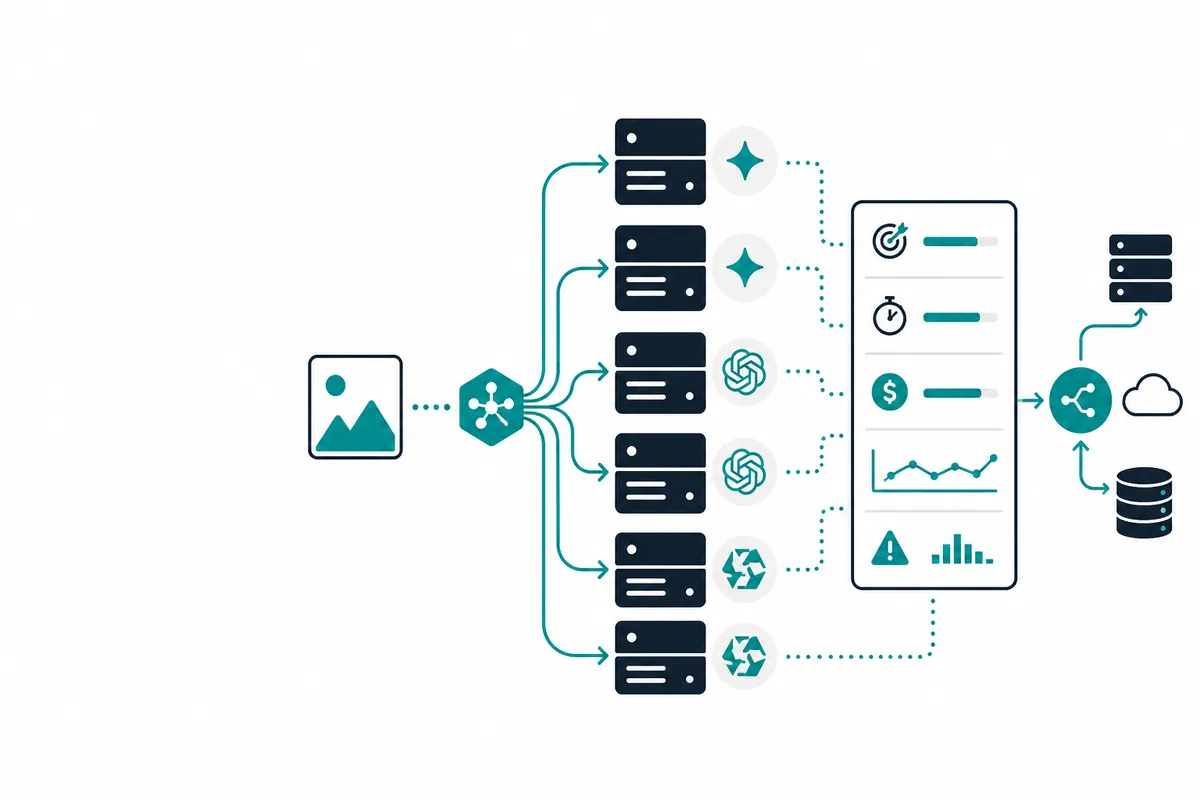
Compare successful task cost, not just the advertised unit price. A cheaper model that needs three retries or produces unusable output can cost more than a stronger first-pass model. For teams, routing also reduces lock-in: use a primary model, a cheaper fallback for routine requests, and a circuit breaker for provider incidents.
How to Use Gemini Advanced review with an API#
Start with a small, sanitized fixture. Keep the API key in an environment variable, set explicit timeouts, log request IDs rather than prompts, and cap output tokens. The following examples use placeholders intentionally; replace them with an approved current model ID after checking your account.
const response = await fetch("https://ai.crazyrouter.us/v1/chat/completions", {
  method: "POST",
  headers: {
    "Authorization": `Bearer ${process.env.CRAZYROUTER_API_KEY}`,
    "Content-Type": "application/json"
  },
  body: JSON.stringify({ model: "YOUR_APPROVED_MODEL", messages: [
    { role: "user", content: "Review this diff and return risks as JSON." }
  ] })
});
console.log(await response.json());
A production wrapper should add exponential backoff for transient 429 and 5xx responses, idempotency for asynchronous jobs, and a deadline shorter than the user-facing request timeout. For multimodal or video workflows, prefer a queue and webhook reconciliation over holding an HTTP request open. Store the provider job ID, status, model, estimated cost, and final asset checksum.
Pricing Breakdown#
| Cost item | Official provider | Crazyrouter path | Budgeting advice |
|---|---|---|---|
| Input tokens or media | Check the provider's current pricing page | Check the live Crazyrouter pricing/dashboard | Separate cached and uncached input |
| Output tokens or generated media | Usually metered by output size or duration | Depends on the selected routed model | Set per-request and per-user limits |
| Subscription access | May bundle an interactive product | Usually not a substitute for a consumer subscription | Compare actual developer usage |
| Retries and queue time | Often indirect operational cost | Can be reduced with fallback routing | Track cost per successful result |
Do not publish hard-coded rates as permanent facts. Prices and model availability move quickly. Create a spreadsheet with input units, output units, cache-hit rate, retry rate, and monthly requests. Then verify every rate against the official provider page and the Crazyrouter pricing page. Crazyrouter can be useful when a team wants one OpenAI-compatible base URL and a centralized place to compare available models, but your final decision should use the live account data.
A simple monthly estimate is:
monthly cost = requests × (input units × input rate + output units × output rate) × (1 + retry rate)
For video, audio, or image generation, replace token units with seconds, characters, images, or provider-specific credits. Add storage, egress, moderation, and observability when calculating total cost of ownership.
Production Checklist#
- Pin an approved model alias in configuration rather than scattering IDs through code.
- Redact personal data and secrets before sending prompts or media.
- Add timeout, retry, circuit-breaker, and fallback policies.
- Record latency, status, token/media usage, and task-success metrics.
- Test difficult cases: empty input, oversized context, malformed output, cancellation, and provider outage.
- Review generated code, tool calls, and external actions before execution.
FAQ#
Is Gemini Advanced review free?#
A free web tier, trial, or open-source checkpoint does not necessarily mean free API usage. Check the current provider quota and billing terms before building around it.
What is the best alternative?#
There is no universal winner. Choose based on modality, quality target, latency, privacy, region, tooling, and total cost per successful task. Benchmark your own representative fixtures.
Can I call it through Crazyrouter?#
If the model is listed and enabled for your account, Crazyrouter may provide an OpenAI-compatible route. Confirm the live model ID, parameters, quotas, and pricing before deployment.
How do I reduce API cost?#
Trim repeated context, use prompt caching where supported, cap outputs, batch offline work, route easy requests to smaller models, and measure retry rates.
Is an API key safe in frontend code?#
No. Keep provider or gateway keys on a server, worker, or secret manager. The browser should receive a short-lived application token or call your backend.
Summary#
Gemini Advanced review is most useful when paired with disciplined engineering: explicit budgets, verified capabilities, safe secrets, observable requests, and a tested fallback. Start with one small fixture, compare alternatives on successful-task economics, and expand only after the failure modes are understood.
For a single integration point across supported AI models, review Crazyrouter, check the live pricing, and use the model that meets your quality and compliance requirements.