 简体中文
 繁體中文
 English
 Français
 Русский
 日本語
 Tiếng Việt
 한국어
 Deutsch
 Español
 Italiano
 Português
 العربية
 ไทย
 Bahasa Indonesia
 Bahasa Melayu
 Türkçe
 Polski
 Nederlands
 Dansk
 Norsk
 Қазақша
GPT-5.3 Codex API Access Guide: Pricing, Setup, and OpenRouter Alternatives
Want to use GPT-5.3 Codex for code generation? Here's how to access it, compare pricing, and choose the best OpenRouter alternative for developer workflows.
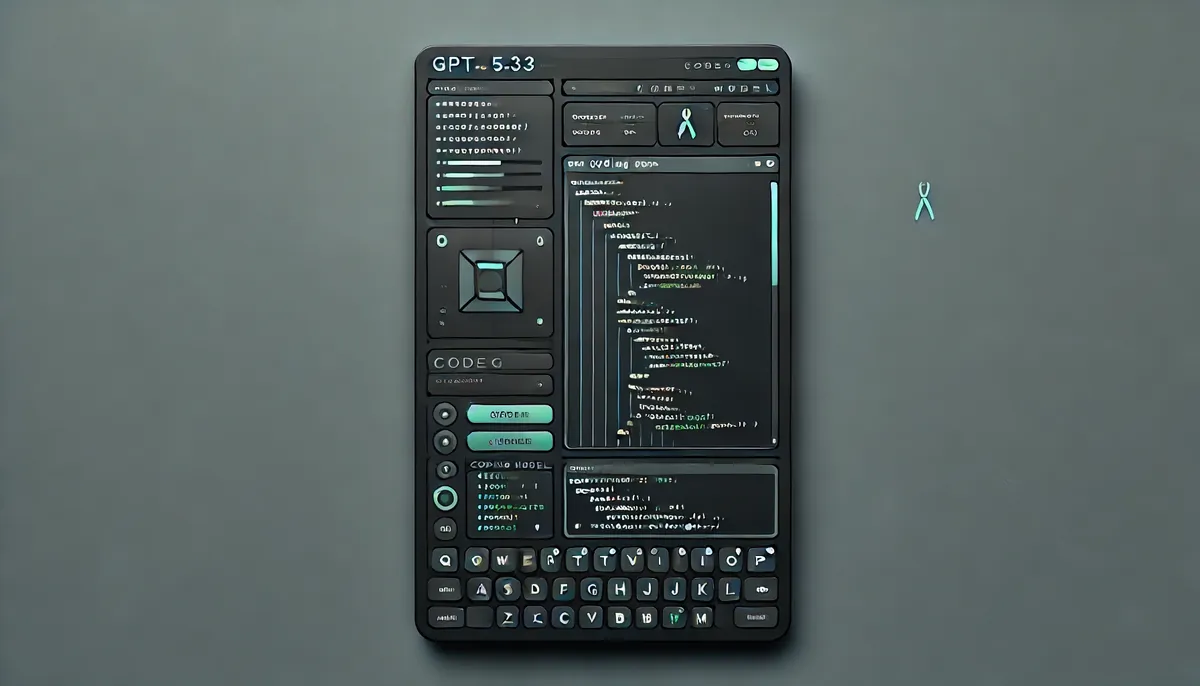
GPT-5.3 Codex API Access Guide: Pricing, Setup, and OpenRouter Alternatives#
An OpenRouter alternative is a service that routes AI requests through another gateway, a cloud platform, or a direct model provider. The right choice depends on the models, API features, data terms, and billing controls your application actually needs.
Crazyrouter is a multi-model API gateway that offers a single API key, exposes an OpenAI-compatible base URL, and lists GPT-5.3 Codex at $1.14 per 1M input tokens.
Key facts#
- As of 2026-10-15, the GPT-5.3 Codex price page lists Crazyrouter input at $1.14 per 1M tokens.
- As of 2026-10-15, that page lists Crazyrouter output at $9.10 per 1M tokens.
- As of 2026-10-15, the page records a reference OpenAI input price of $1.75 per 1M tokens; verify the linked official schedule before buying.
- As of 2026-10-15, its reference OpenAI output price is $14.00 per 1M tokens.
- As of 2026-10-15, its Crazyrouter cached-input entry is $0.114 per 1M tokens, subject to route support.
- As of 2026-10-15, the page lists a 272K context limit; application and endpoint limits still need checking.
What are the best OpenRouter alternatives?#
For a developer choosing an alternative, compare direct OpenAI access, a cloud-managed deployment, and a multi-model gateway such as Crazyrouter. Direct access suits a single-provider application; a cloud route can suit existing enterprise procurement; a gateway can simplify a mixed-model application. None of these categories automatically guarantees lower latency, identical features, or a particular data-retention policy. Check the exact endpoint and contract before routing private source code, and test streaming, tool calls, error handling, and token usage with a small workload before switching a production integration.
| Route | Access pattern | Check before choosing |
|---|---|---|
| Direct OpenAI | Provider-specific account and billing | Model eligibility and endpoint support |
| Azure OpenAI | Cloud-managed model deployment | Region, deployment quota, and contract |
| Crazyrouter | Shared multi-model gateway account | Model route, token rates, and data terms |
| Self-hosted gateway | Your infrastructure and upstream accounts | Maintenance, secrets, and operating costs |
That means this page should answer four questions quickly:
- how to access the API
- what it costs
- whether an API gateway is easier than direct access
- how to get started now
Why GPT-5.3 Codex Matters#
This class of model is optimized for code-heavy tasks:
- code generation
- patching
- refactoring
- debugging
- agent-style tool use
For many teams, coding models are not just chat models. They are part of CI pipelines, IDE plugins, internal dev tools, and code review systems.
Setup Path#
Option 1: Direct provider access#
Good if you only use one provider and already have billing set up.
Option 2: Gateway access through Crazyrouter#
Better if you want:
- one API key for multiple coding models
- access to Claude Sonnet, GPT-5.3 Codex, and other models together
- easier payment methods
- logs and usage tracking by key
Fastest Developer Setup#
from openai import OpenAI

client = OpenAI(
    api_key="your-crazyrouter-key",
    base_url="https://api.crazyrouter.com/v1"
)

resp = client.chat.completions.create(
    model="gpt-5.3-codex",
    messages=[
        {"role": "user", "content": "Refactor this Python function for clarity and performance"}
    ]
)
print(resp.choices[0].message.content)
Why Gateways Work Better for Coding Teams#
Coding teams rarely stay on one model forever. One month it's GPT-5.3 Codex. Next month it's Claude Sonnet for code review. Then maybe Gemini for multimodal docs.
A gateway keeps your stack flexible.
| Need | Direct Access | Crazyrouter |
|---|---|---|
| One model only | Fine | Fine |
| Multi-model coding workflow | Weak | Strong |
| Local payment methods | Weak | Strong |
| Detailed usage logs | Limited | Strong |
| Team-level key management | Limited | Strong |
Recommended Flow#
Use GPT-5.3 Codex for generation and patching. Pair it with Claude Sonnet for review and explanation. Manage both through one API key and one billing dashboard.
→ Pricing | Register | Create Key | Top up
FAQ#
What are the best OpenRouter alternatives?#
Direct provider APIs, cloud-managed endpoints, and multi-model gateways address different needs. Compare supported models, data terms, billing, and the features your application uses before selecting a route.
What is the best openrouter alternative 2026 for coding?#
A coding team should test its actual edit and review tasks against each candidate. Crazyrouter is one gateway option, but price alone does not establish tool-call compatibility or patch quality.
Is Crazyrouter cheaper than direct GPT-5.3 Codex access in 2026?#
The linked 2026-10 pricing snapshot lists 9.10 output per 1M tokens on Crazyrouter, below the reference provider rates on the same page. Treat this as a published price comparison, not a guarantee of identical route features.
Can I reuse an OpenAI SDK with another gateway?#
An OpenAI-compatible endpoint can accept the familiar SDK request format when the requested API is supported. Set the gateway base URL and key, then verify the exact model and response fields.
Does switching gateways preserve all Codex features?#
No blanket compatibility claim is justified by the model name alone. Test tool calls, streaming, context handling, and the API endpoint used by your coding client.
<!-- crazyrouter-related-links -->