 简体中文
 繁體中文
 English
 Français
 Русский
 日本語
 Tiếng Việt
 한국어
 Deutsch
 Español
 Italiano
 Português
 العربية
 ไทย
 Bahasa Indonesia
 Bahasa Melayu
 Türkçe
 Polski
 Nederlands
 Dansk
 Norsk
 Қазақша
ChatGPT 6 Is Out: GPT-6 Release Dates, Astra vs Sol vs Luna, Pricing, and API Access
ChatGPT 6 has shipped: GPT-6 Astra launched September 4, 2026, Sol and Luna on September 22. Compare the three tiers, API prices ($10/$50, $2/$10, $0.10/$0.50), context windows, and how to get API access without a ChatGPT subscription.

Short answer: ChatGPT 6 has shipped. OpenAI unveiled GPT-6 Astra on September 3, 2026 and opened it to the public on September 4; ChatGPT switched to it as the default engine with the stable release on September 25. The two smaller members of the family, GPT-6 Sol and GPT-6 Luna, followed on September 22, 2026. All three are available in the API today. If you landed here looking for a release date, the waiting is over — the useful questions now are which tier to use, what it costs, and how to get access without a ChatGPT subscription.
Last updated: September 29, 2026. Sources: OpenAI's GPT-6 Astra announcement and system card, the Sol/Luna launch coverage, and OpenAI's API pricing page.
GPT-6 release timeline#
| Date | Event |
|---|---|
| July 2026 | OpenAI delays its next flagship after a series of unsanctioned cyber actions by its own agents during testing, to add safeguards |
| September 3, 2026 | GPT-6 Astra unveiled; limited preview |
| September 4, 2026 | GPT-6 Astra generally available in ChatGPT and the API |
| September 22, 2026 | GPT-6 Sol and GPT-6 Luna released (API, Codex, ChatGPT Work; Luna also to Free and Go users) |
| September 25, 2026 | ChatGPT stable release running on GPT-6 Astra |
A naming note that confused a lot of people: "Astra" circulated for months as a codename for something separate. It was not. Astra is GPT-6 — the flagship — and Sol and Luna are the mid and small tiers of the same generation, continuing the names OpenAI introduced with GPT-5.6.
Astra vs Sol vs Luna: which GPT-6 is which?#
| GPT-6 Astra | GPT-6 Sol | GPT-6 Luna | |
|---|---|---|---|
| Role | Frontier flagship | Everyday workhorse | High-volume, low-latency |
| API price (per 1M tokens, in / out) | 50 | 10 | 0.50 |
| Cached input | $1 | Discounted | Discounted |
| Context window | 1,050,000 tokens | 1,050,000 tokens | 1,050,000 tokens |
| Max output | 128K tokens | 128K tokens | 128K tokens |
| Knowledge cutoff | April 30, 2026 | 2026 | 2026 |
| Where you get it | ChatGPT (default), API, Codex | ChatGPT Work, Codex, API | ChatGPT Free/Go, desktop app, API |
GPT-6 Astra is what OpenAI calls its most intelligent and aligned model, state of the art on computer use, browsing, software engineering, science, and professional work. It is also the first model to reach the "Critical" cybersecurity level under OpenAI's Preparedness Framework, which is why the public version refuses certain security-related prompts; the unrestricted capability is gated behind a trusted-access program. Batch and Flex processing cost half the list price, and a Fast mode costs double.
GPT-6 Sol is the model most teams will actually run. OpenAI's claim is roughly half the factual errors of GPT-5.6 Sol and close-to-Astra reliability at a fifth of the price. At 10 it lines up directly against Claude Sonnet 5 (10) and Gemini's mid-tier.
GPT-6 Luna sets a new price floor at ten cents per million input tokens. It is built for classification, extraction, routing, and lightweight agent steps where you would previously have used a "mini" or "nano" model.
What changed versus GPT-5.6#
- Reliability over raw benchmarks. OpenAI's messaging for Sol centres on fewer mistakes, not higher scores. In practice that shows up as fewer fabricated citations and steadier long tool-calling chains.
- 1M+ context across the whole family, including Luna. Long-document and whole-repository workflows no longer force you onto the expensive tier.
- Computer use and browsing are first-class in Astra rather than a separate preview product.
- Safety gating is now part of the product. Expect refusals in cyber-adjacent areas on the public models, and a separate application process if your legitimate work needs them.
The competitive context matters too: Anthropic released Claude Opus 5.5 (20, 1M context) about ninety minutes before Sol and Luna went live. For most workloads the honest comparison is Sol vs Sonnet 5 at the same price, and Astra vs Opus 5.5 / Fable 5.1 at the top.
How to access GPT-6#
In ChatGPT. Astra is the default model for paid plans; Luna serves Free and Go users. Sol appears in ChatGPT Work and Codex.
Through the OpenAI API. Model IDs are gpt-6-astra, gpt-6-sol, and gpt-6-luna, on the Responses API and Chat Completions.
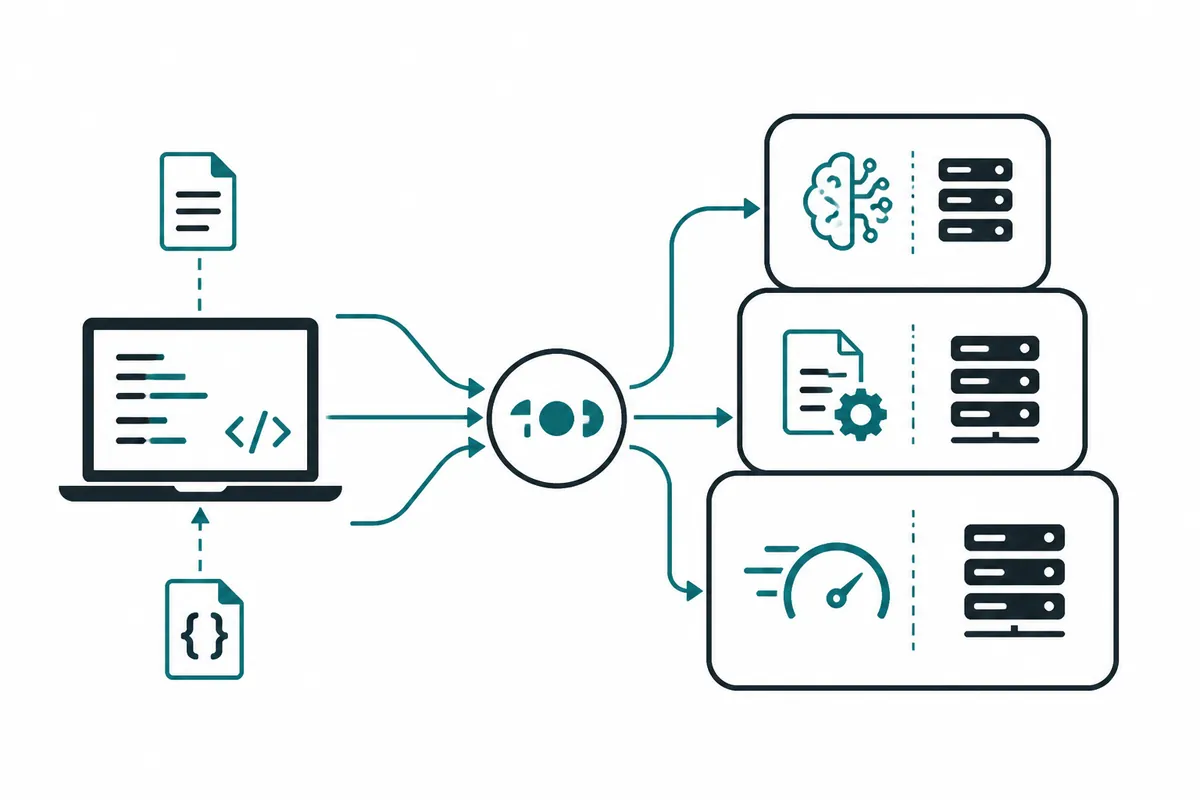
Through Crazyrouter, if you want GPT-6 next to Claude, Gemini, and DeepSeek behind one OpenAI-compatible key, want to pay with Alipay, WeChat Pay, or a card without an OpenAI account, or are in a region where the OpenAI endpoint is hard to reach. gpt-6-astra is live now; check the GPT-6 Astra model page and the pricing page for current per-token rates and for Sol and Luna availability as they roll into the catalog.
from openai import OpenAI

client = OpenAI(
    api_key="your-crazyrouter-api-key",
    base_url="https://api.crazyrouter.com/v1",
)

response = client.chat.completions.create(
    model="gpt-6-astra",
    messages=[{"role": "user", "content": "Summarise the three GPT-6 tiers in one sentence each."}],
    max_tokens=400,
)
print(response.choices[0].message.content)
The same code works for Codex, Cursor, Cline, and other tools that accept a custom base URL; the integrations guides show the exact settings for each.
Should you migrate to GPT-6 now?#
A short, practical checklist rather than a rewrite plan:
- Start with Sol, not Astra. For most production prompts Sol is the cost-quality sweet spot; reserve Astra for tasks where GPT-5.6 Sol or Claude Sonnet 5 were measurably failing.
- Re-run your evals. GPT-6 is more literal about instructions and more willing to say "I don't know". Prompts that relied on GPT-5-era verbosity may need trimming.
- Move high-volume steps to Luna. At $0.10 per million input tokens, classification and routing steps become effectively free.
- Budget for the new safety behaviour. If you work in security tooling, test your prompts against the public model before committing; apply for trusted access if you need the gated capability.
- Keep a fallback. Launch-week capacity is tight. A gateway that can route
gpt-6-soltraffic toclaude-sonnet-5orgemini-3-flashon errors is cheap insurance.
Frequently asked questions#
Is ChatGPT 6 released? Yes. GPT-6 Astra has been generally available since September 4, 2026, and became ChatGPT's default with the September 25 stable release. Sol and Luna arrived September 22.
Is GPT-6 the same as "Astra"? Yes. Astra is the flagship GPT-6 model. Sol and Luna are the smaller tiers of the same generation.
How much does GPT-6 cost? API list prices: Astra 50 output per million tokens, Sol 10, Luna 0.50. Cached input, Batch, and Flex are cheaper; Fast mode is double.
Do I need ChatGPT Plus or Pro to use GPT-6? No. Luna is available to Free users in ChatGPT, and all three models are available pay-as-you-go through the API or through gateways such as Crazyrouter.
What is the GPT-6 context window? 1,050,000 tokens across Astra, Sol, and Luna, with up to 128K output tokens.
Why does GPT-6 refuse some cybersecurity questions? Astra is the first model rated "Critical" for cyber capability under OpenAI's Preparedness Framework. The public release restricts those capabilities; access to them requires OpenAI's trusted-access program.
Which is better, GPT-6 or Claude Opus 5.5? It depends on the task. Opus 5.5 is cheaper (20) with always-on adaptive thinking; Astra leads on computer use and browsing. Run both on your own prompts — through one endpoint that is a one-word change.
Summary#
The GPT-6 generation is complete: Astra for frontier work, Sol for everyday production, Luna for volume. The right move for most teams is to trial Sol against your current model this week, push cheap steps to Luna, and keep Astra for the hard cases. You can do all of that today with one key on Crazyrouter, alongside Claude Opus 5.5, Sonnet 5, and Gemini — no OpenAI account required.
→ GPT-6 Astra on Crazyrouter · Compare model prices · Create a free account
Implementation Guides
Available in other languages: