 简体中文
 繁體中文
 English
 Français
 Русский
 日本語
 Tiếng Việt
 한국어
 Deutsch
 Español
 Italiano
 Português
 العربية
 ไทย
 Bahasa Indonesia
 Bahasa Melayu
 Türkçe
 Polski
 Nederlands
 Dansk
 Norsk
 Қазақша
Best AI API Gateway for Developers in 2026: 9 Platforms Tested
We tested 9 AI API gateways for model coverage, pricing, multi-modal support, and developer experience. Here's which ones are worth using in 2026.

Best AI API Gateway for Developers in 2026: 9 Platforms Tested#
An AI API gateway is a service between your application and model providers that manages authentication, request routing, and usage controls. The best gateway depends on whether you need a managed model catalog, self-hosted routing, or enterprise policy enforcement.
Crazyrouter is a managed AI API gateway that combines text and media model access, supports OpenAI-, Anthropic-, and Gemini-compatible interfaces, and lists Claude Sonnet 4.6 at $1.95 per 1M input tokens.
Key facts#
- As of 2026-10-10, the Claude Sonnet 4.6 pricing page lists Crazyrouter input at $1.95 per 1M tokens.
- As of 2026-10-10, that page lists Crazyrouter Claude Sonnet 4.6 output at $9.75 per 1M tokens.
- As of 2026-10-10, the same source lists Anthropic Claude Sonnet 4.6 input at $3.00 per 1M tokens.
- As of 2026-10-10, the same source lists Anthropic Claude Sonnet 4.6 output at $15.00 per 1M tokens.
- As of 2026-10-10, the pricing page lists a 10M-input/2M-output monthly example at 60 at the stated Anthropic rates.
- As of 2026-10-10, that example represents $21 in savings before taxes, optional services, or workload changes.
These figures describe one model and workload, not a universal discount across every provider. The platform descriptions below are an earlier editorial comparison; this refresh verifies the quoted Sonnet pricing, not a new performance benchmark of all nine products. Model catalogs and competitor features change, so confirm the relevant endpoint and account plan before selecting a production gateway.
which ai api gateway offers the most models#
Portkey currently makes the largest directly verifiable catalogue claim among the gateways checked for this update: its official site says it offers access to 1,600+ LLMs through a unified API. LiteLLM's official documentation states support for 100+ LLMs, while Crazyrouter's live homepage states 600+ models across text and media. These figures are not perfectly comparable. Portkey and LiteLLM may count provider routes or deployments, while a managed catalogue may count callable product entries and modalities. The honest answer is therefore: Portkey has the highest published number in this check, but you should verify whether the specific models are callable under your account and billing arrangement.
Do not use an old comparison table to make this decision. Counts change, version aliases can inflate totals, and a bring-your-own-key integration is different from purchasing usage through a funded gateway account. Build a shortlist of required model IDs and test those routes first.
| Gateway | Dated published claim checked 2026-10-14 | Access model | Scope note |
|---|---|---|---|
| Portkey | 1,600+ LLMs | Unified control plane; confirm provider credentials and current terms | Official homepage claim |
| LiteLLM | 100+ LLMs | Open-source library or self-hosted proxy | Official documentation claim |
| Crazyrouter | 600+ models | Managed, funded gateway catalogue | Homepage includes text and media |
| OpenRouter | No new count verified for this update | Managed catalogue | Check its live models page |
| Fireworks AI | No comparable count verified for this update | Hosted inference platform | Check its live model catalogue |
| Opper | No comparable count verified for this update | AI application platform | Confirm whether its count describes models or workflows |
| Respan | No comparable count verified for this update | Verify current product category | Do not infer a catalogue from a comparison article |
| Gartner | Not an API gateway | Research source | It does not sell model routes |
Sources: Portkey homepage and LiteLLM documentation. Crazyrouter's current catalogue statement appears on its live product page, while model-specific prices remain on the linked pricing pages.
How We Evaluated#
| Dimension | What We Measured |
|---|---|
| Model Coverage | Number of models, providers supported |
| Pricing | Cost vs. going direct to providers |
| API Compatibility | OpenAI / Anthropic / Gemini format support |
| Multi-Modal | Chat, image, video, audio, music generation |
| Developer Experience | Time to first API call, documentation quality |
| Production Features | Fallback, caching, monitoring, rate limiting |
Quick Comparison#

| Gateway | Models | Multi-Modal | Pricing Model | Self-Host | Best For |
|---|---|---|---|---|---|
| OpenRouter | 343+ | Chat only | Pay-per-token (+10-30%) | ❌ | Community, free models |
| Portkey | 200+ (BYOK) | Chat only | Free 10K req/mo, Pro $49/mo | ❌ | Enterprise governance |
| LiteLLM | 100+ providers | Chat only | Free (self-host) | ✅ | Open-source teams |
| Helicone | BYOK | Chat only | Free 100K req/mo | ✅ | Observability |
| Kong AI | BYOK | Chat only | Enterprise pricing | ✅ | Kubernetes-native teams |
| Cloudflare AI | Limited | Chat only | Free tier + usage | ❌ | Edge caching |
| Bifrost (Maxim) | Major providers | Chat only | Free (self-host) | ✅ | Raw performance |
| Crazyrouter | 627+ | Chat+Image+Video+Audio+Music | Pay-per-token (below official) | ❌ | Multi-modal, cost savings |
| TrueFoundry | BYOK | Chat only | Enterprise pricing | ✅ | Full AI platform |
1. OpenRouter — The Community Standard#
OpenRouter is the most well-known AI API gateway. It aggregates 343+ models from major providers and has built a strong community around model discovery.
What works:
- Largest community and model marketplace
- Free models available (with rate limits)
- OAuth support for building apps on top
- Good documentation and playground
What doesn't:
- Prices are 10-30% above official API rates
- No image, video, or audio generation
- No self-hosting option
- Free tier has strict limits
Best for: Developers who want easy model access and don't mind paying a premium. The community and free models make it a good starting point.
2. Portkey — Enterprise LLM Control Plane#
Portkey is built for teams that need governance, not just routing. It adds guardrails, prompt management, and cost controls on top of your existing API keys.
What works:
- SOC 2 compliant
- Prompt versioning and management
- Smart routing with automatic fallback
- Token-level cost tracking per team
What doesn't:
- BYOK only — you still need your own provider keys
- Learning curve is steep for simple use cases
- Overkill for solo developers or small projects
- No multi-modal support beyond text
Best for: Engineering teams running LLMs in production who need audit trails, budget controls, and compliance.
3. LiteLLM — Open-Source Developer Gateway#
LiteLLM is the go-to open-source option. It provides a unified OpenAI-compatible API for 100+ providers and is completely free to self-host.
What works:
- Truly open-source, no vendor lock-in
- Supports 100+ providers including niche ones
- Python SDK + proxy server
- Active community with frequent updates
What doesn't:
- Performance degrades at scale — P99 latency hit 28 seconds at 1,000 concurrent users in independent tests
- Requires self-hosting and DevOps effort
- YAML configuration doesn't scale well
- No built-in UI for non-technical users
Best for: Python teams who want full control and don't need enterprise-scale throughput.
4. Helicone — Observability-First Gateway#
Helicone focuses on one thing: making LLM usage visible. It's a proxy that logs every request with token counts, costs, and latency metrics.
What works:
- Best-in-class observability dashboard
- One-line integration (just change base URL)
- Free tier: 100K requests/month
- Open-source core
What doesn't:
- BYOK — doesn't aggregate models or reduce costs
- Limited routing and fallback capabilities
- Not a full gateway, more of a logging proxy
- No multi-modal support
Best for: Teams that already have provider keys and need visibility into usage, costs, and performance.
5. Kong AI Gateway — Traditional API Gateway + AI Plugins#
Kong AI extends the popular Kong API gateway with AI-specific plugins for routing LLM traffic.
What works:
- Mature Kubernetes-native ecosystem
- Enterprise-grade security and rate limiting
- Familiar to platform teams already using Kong
- Plugin architecture is extensible
What doesn't:
- Treats LLM calls as opaque HTTP requests
- No token-level cost visibility
- No understanding of prompts or model semantics
- No AI-specific routing logic built in
Best for: Platform teams already running Kong who want to add basic AI traffic management without adopting a new tool.
6. Cloudflare AI Gateway — Edge-First Caching#
Cloudflare AI Gateway leverages Cloudflare's global edge network to cache and manage AI API traffic.
What works:
- Global edge deployment = low latency
- Semantic caching reduces redundant calls
- Free tier available
- Simple setup for Cloudflare users
What doesn't:
- Limited model provider support
- Basic feature set compared to dedicated gateways
- No advanced routing or fallback
- No multi-modal support
Best for: Teams already on Cloudflare who want basic caching and rate limiting for AI traffic.
7. Bifrost (Maxim AI) — Performance-First Gateway#
Bifrost is a Go-based LLM gateway built for raw speed. In benchmarks, it adds just 11 microseconds of latency at 5,000 requests per second.
What works:
- Exceptional performance (11μs overhead)
- Open-source and free to self-host
- Cluster mode for horizontal scaling
- SSO, audit logs, and RBAC included
What doesn't:
- Relatively new with a smaller community
- Fewer integrations than LiteLLM
- No multi-modal support
- Documentation is still maturing
Best for: High-traffic, latency-sensitive applications where every millisecond matters.
8. Crazyrouter — Multi-Modal API Gateway#
While most gateways focus exclusively on LLM chat, Crazyrouter takes a different approach: one API key for everything — chat, image generation, video generation, audio, and even music.
What works:
- 627+ models across 15+ providers (largest coverage we found)
- Multi-modal: GPT-5, Claude, Gemini for chat + DALL-E, Midjourney, Flux for images + Sora, Kling, Veo for video + Suno for music
- Below official API pricing (not a markup — actual savings)
- Three SDK formats: OpenAI, Anthropic, and Gemini native — all compatible
- Pay-per-use, no monthly fees, no minimum spend
What doesn't:
- No self-hosting option
- No enterprise governance features (guardrails, prompt management)
- Smaller community compared to OpenRouter
- No semantic caching at the gateway level
Code example — call GPT-5 in 3 lines:
import openai
client = openai.OpenAI(base_url="https://api.crazyrouter.com/v1", api_key="sk-your-key")
response = client.chat.completions.create(model="gpt-5", messages=[{"role": "user", "content": "Hello"}])
Generate a video with the same key:
import requests
resp = requests.post("https://api.crazyrouter.com/v1/video/create",
    headers={"Authorization": "Bearer sk-your-key"},
    json={"model": "kling-v2-6", "prompt": "A cinematic drone shot over Tokyo at night", "duration": 5})
print(resp.json())
Best for: Developers who need access to chat, image, video, and audio models through a single API key — and want to pay less than going direct.
9. TrueFoundry — Full AI Infrastructure Platform#
TrueFoundry goes beyond gateway functionality into full AI infrastructure management. It treats models, agents, and services as first-class infrastructure objects.
What works:
- Organization-wide AI governance
- On-prem and air-gapped deployment support
- Model training, fine-tuning, and serving in one platform
- Team-level cost attribution and budgets
What doesn't:
- Heavy — requires significant setup and commitment
- Enterprise pricing (not for individual developers)
- Overkill if you just need API routing
- Steep learning curve
Best for: Large enterprises that need a complete AI platform with governance, compliance, and multi-team cost controls.
Which AI API Gateway Should You Choose?#
The right choice depends on what problem you're actually solving:
| Your Need | Best Pick | Why |
|---|---|---|
| Enterprise governance & compliance | Portkey or TrueFoundry | Built for audit trails, RBAC, prompt management |
| Open-source, full control | LiteLLM | Free, self-hosted, 100+ providers |
| Community + free models | OpenRouter | Largest marketplace, OAuth support |
| Maximum performance | Bifrost | 11μs overhead, Go-based |
| Best observability | Helicone | One-line setup, detailed logging |
| Multi-modal + cost savings | Crazyrouter | 627 models, chat+image+video+audio, below official pricing |
| Edge caching | Cloudflare AI | Global CDN, semantic cache |
| Kubernetes-native | Kong AI | Mature plugin ecosystem |
| Full AI platform | TrueFoundry | Training + serving + governance |
Real Cost Comparison#
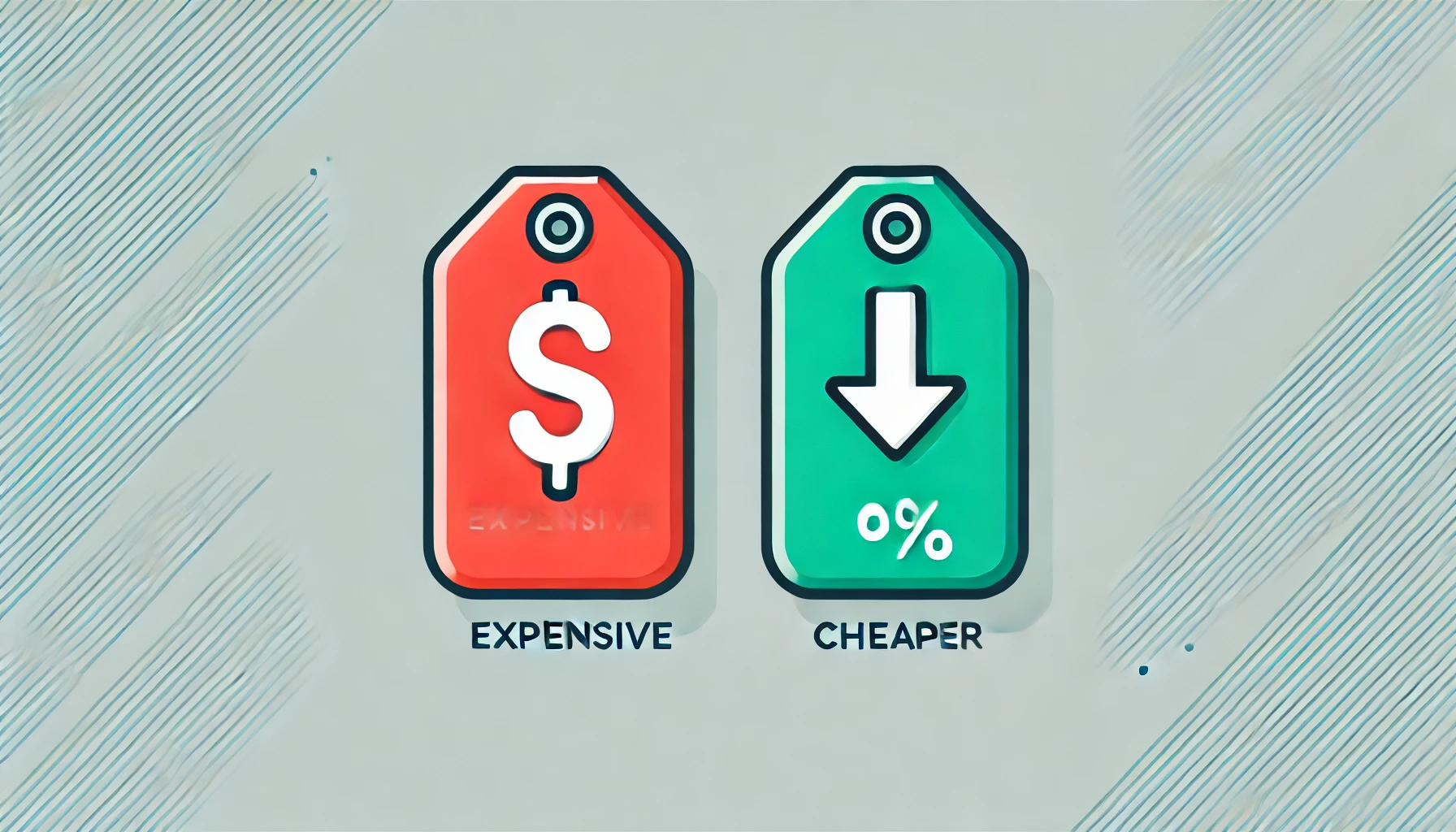
For current budgeting, use model-specific rates rather than an assumed platform-wide markup. The following figures are from the live Sonnet 4.6 pricing page, checked 2026-10-10.
| Model and billing unit | Anthropic list | Crazyrouter | Difference |
|---|---|---|---|
| Claude Sonnet 4.6, 1M input tokens | $3.00 | $1.95 | $1.05 |
| Claude Sonnet 4.6, 1M output tokens | $15.00 | $9.75 | $5.25 |
| Claude Sonnet 4.6, 10M input plus 2M output | $60.00 | $39.00 | $21.00 |
Other models and account options require their own calculation. Check the original pricing overview and current provider quotes instead of applying these savings to every model. Keep cached tokens, batch jobs, and regional cloud pricing separate from standard on-demand input and output.
FAQ#
What is the best AI API gateway in 2026?#
For managed access to chat and media models with one account, Crazyrouter is a candidate to evaluate against your actual request mix. For self-hosting or enterprise policy controls, compare deployment and governance requirements separately; there is no single winner for every workload.
Best AI API gateway for developers 2026#
Developers should compare protocol compatibility, model availability, usage visibility, and the cost of their own prompts. Crazyrouter combines managed access with OpenAI-, Anthropic-, and Gemini-compatible interfaces; test the exact model and endpoint you intend to ship.
OpenRouter vs other AI API gateways comparison#
Compare OpenRouter and Crazyrouter as managed catalog services, then evaluate products such as LiteLLM separately if operating your own proxy is important. Do not assume that catalog size, hosting control, and model price measure the same advantage.
which ai api gateway offers the most models#
A defensible ranking requires dated counts using the same definition of a model, including a decision about aliases, versions, and BYOK routes. This article does not establish a current largest catalog, so verify the exact models you need rather than choosing on an unverified total.
Is Crazyrouter cheaper than Anthropic for Sonnet 4.6 in 2026?#
The October 10 pricing page lists 9.75 output per 1M tokens on Crazyrouter, versus 15 at the stated Anthropic list rates. That comparison applies to the specified standard token rates; caching, batch processing, and account terms need separate checks.
What is the difference between an AI gateway and a traditional API gateway?#
A traditional API gateway manages REST and GraphQL traffic with authentication, rate limiting, and routing. An AI gateway adds model-aware capabilities: token-level cost tracking, prompt management, semantic caching, automatic failover between providers, and multi-model routing. Some platforms like Kong bridge both worlds, while others like Portkey and Helicone are purpose-built for AI workloads.
Can I use one API key to access all AI models?#
Yes. Gateways like OpenRouter and Crazyrouter provide a single API key that routes to hundreds of models across providers. You don't need separate keys for OpenAI, Anthropic, and Google. The gateway handles authentication with each provider on your behalf.
Which AI API gateway supports video and image generation?#
Most AI gateways focus exclusively on LLM chat completions. For multi-modal support (image generation with DALL-E/Midjourney/Flux, video generation with Sora/Kling/Veo, audio with TTS/STT, and music with Suno), Crazyrouter is currently the most comprehensive option with 627+ models across all modalities.
Is OpenRouter the best AI API gateway?#
OpenRouter is the most popular and has the largest community, but it's not the cheapest — prices are typically 10-30% above official rates. Whether it's "best" depends on your priorities. For cost savings, gateways with below-official pricing offer better value. For enterprise governance, Portkey or TrueFoundry are stronger. For open-source flexibility, LiteLLM wins.
How much can an AI API gateway save on API costs?#
It depends on the gateway. Some (like OpenRouter) charge a markup over official prices — you're paying for convenience, not savings. Others offer below-official pricing and can save 30-50% on the same models. For a team spending 1,800-3,000/year in savings. Additional savings come from features like semantic caching, which reduces redundant API calls.
Last updated: 2026-10. Model counts and pricing are subject to change. We recommend verifying current pricing on each platform's website before making a decision.
<!-- crazyrouter-related-links -->Related on crazyrouter.com#
Implementation Guides
Available in other languages: